
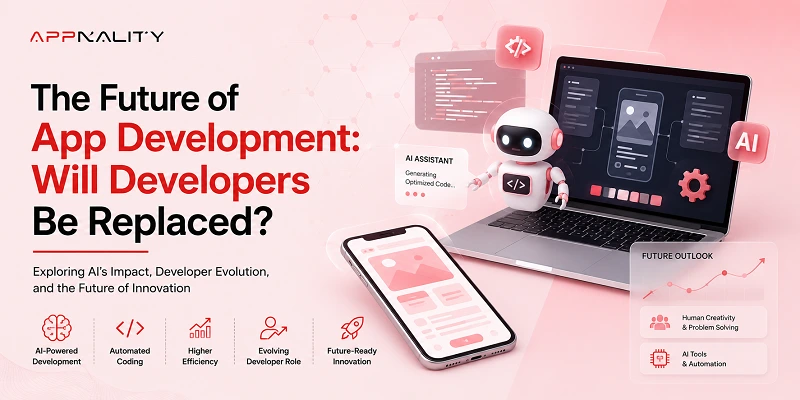

Watching an AI model churn out fully functional code in three seconds flat is enough to make any software engineer pause. This rapid rise of generative code tools has everyone asking a massive question: Are developers at risk from AI of being programmed out of their own jobs? Appnality believes the future of app development is not a story of human replacement, but of human growth. Writing syntax is fast becoming automated, but building a system that actually solves real business problems still needs human logic.
But true success in this era requires a simple combination. Now, we must pair the raw speed of artificial intelligence with the strategic, creative logic of human developers.
Key Insights on the Future of App Development
Before analyzing the concerns for why are developers at risk from AI, keep these baseline realities in mind:
- Generative models excel at repetitive syntax but lack the strategic thinking needed for system design.
- Secure, production-grade applications require continuous human oversight to verify logical correctness.
- Automated code assistance reduces typing time, allowing teams to focus on core product features.
- The most in-demand developers in 2026 are systems thinkers and AI-literate architects, not syntax specialists.
How AI Coding Tools Actually Work Now
We have moved far beyond simple auto-complete suggestions. Modern software engineering departments utilize advanced multi-agent workflows where specialized models draft code, write unit tests, and review syntax flaws autonomously.
This integration is central to the future of software development AI pipelines, where repetitive coding tasks are delegated to machine learning engines. This evolution sparks the critical question: will AI replace developers?
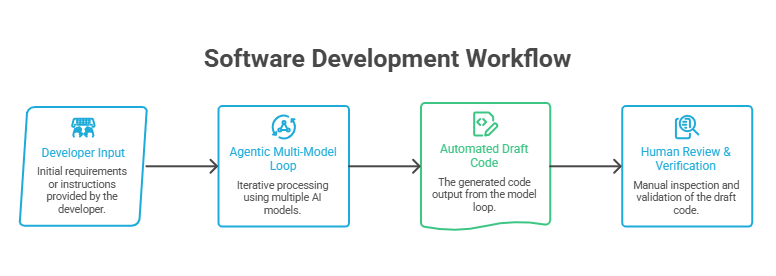
These machine learning models operate by predicting the most probable next token in a code block, drawing from vast repositories of open-source libraries. If you need to integrate basic CRUD operations or configure standard API endpoints, automated systems can generate clean, structured templates instantly.
When our team deploys custom artificial intelligence solutions, we use these predictive tools to accelerate backend configuration. However, writing code is only a small fraction of the software creation cycle. The real challenge lies in designing logic that scales without creating complex technical debt.
What App Development Trends 2026 Are Actually Telling Us
Analyzing app development trends in 2026 reveals a move toward agentic code compilation and real-time microservice coordination. Rather than manual integration, developers now guide orchestrator models that construct separate modules of a system simultaneously.
According to the GitHub Octoverse developer report, over 90% of active engineers now use automated copilot extensions to handle boilerplate code. This shift allows engineers to design complex distributed networks rather than typing repetitive syntax structures.
Knowing these app development trends in 2026 helps teams build highly adaptive software. If you are developing cross-platform applications, you need to ensure that your metadata and core structures align with both platform architectures.
Leveraging hybrid app development allows organizations to deploy unified applications across multiple operating systems while using automated code generation to write platform-specific bridges. These changes clarify the future of app development as a collaborative process where humans act as systems directors.
Are Developers at Risk From AI? What the Data Actually Shows
Why are developers at risk from AI is a primary discussion topic in boardrooms and engineering forums alike. The fear stems from the raw speed of code-generation platforms. A machine learning model can draft a functional landing page or a basic database schema in under ten seconds. Yet, speed does not equal structural safety or logical consistency.
So, will AI replace developers? Before answering that, we must examine the limitations of modern machine learning models. Generative engines operate without genuine conceptual comprehension. They do not understand the commercial goals of a business, nor can they anticipate the subtle security risks of a custom data pipeline.
If a generative system encounters a unique, undocumented bug, it will often hallucinate convincing but incorrect code patterns, which can introduce silent vulnerabilities into your software.
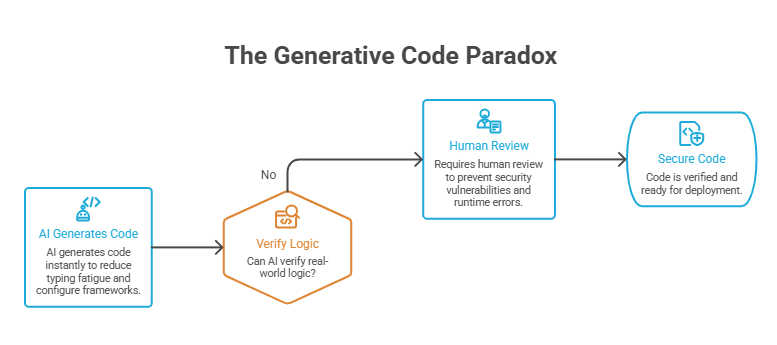
To maintain safety across premium platforms, deep technical validation is mandatory. When building native iOS software, engineers must apply specialized iOS development practices to verify memory management and strict thread safety.
The debate over will AI replace developers or assist them often ignores this critical verification phase, as unverified model output can easily cause app store rejections and system crashes.
How the Developer Role Is Moving from Coder to Architect
The developer role is changing from manual coding to software architecture and logical review. In previous decades, a developer’s value was closely tied to their fluency in specific programming languages.
Today, the ability to write a clean recursive loop or structure a basic SQL query is easily automated. This operational paradigm defines the future of software development AI ecosystems, where conceptual understanding is valued over syntax memorization.
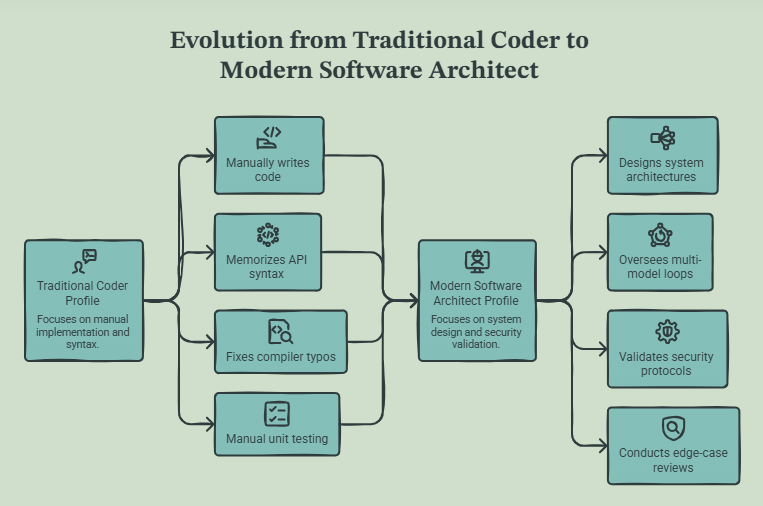
This mindset is reshaping the future of app development. Engineers are becoming reviewers, orchestrators, and logical gatekeepers. They evaluate how different micro-services interact, protect data boundaries, and ensure compliance with strict regional privacy regulations.
When building native Android applications, teams need to apply native Android development practices to configure complex background services and secure user permissions. This architectural guidance is something a generative algorithm cannot replicate, as it requires human empathy, system intuition, and real-world testing.
| Metric | Traditional Development | Automated Integration |
| Primary Task | Writing syntactic lines of code | Designing system architecture and logic |
| Debugging Method | Manual line-by-line inspection | Reading automated test reports and traces |
| Release Speed | Weeks or months per feature | Days or hours with automated pipelines |
| System Testing | Written manually by engineers | Drafted by models, verified by humans |
This division of labor shows that humans remain the core decision-makers. The transition from syntax writer to systems architect ensures that software remains robust, scalable, and closely aligned with exact business objectives.
A Project Where This Collaboration Worked
We see this collaborative methodology succeed in real-world scenarios. In our Multigame project, our team applied specialized development frameworks to launch a multi-functional entertainment platform under a highly compressed timeline. The project required integrating real-time gaming engines with complex backend databases.
Our team used automated code generators to draft initial database schemas and create standard API connections. This allowed our engineers to focus entirely on specialized game logic, custom rendering pipelines, and security protocols.
By letting automated tools handle the repetitive boilerplate tasks, we decreased production times without sacrificing software quality. This approach reflects the most practical app development trends of 2026 we are seeing across the industry, where the future of app development relies on combining automated speed with human ingenuity.
Why Security Cannot Be Automated Away
As automated code generation becomes more common, maintaining secure codebases has become a primary challenge. Machine learning models often pull patterns from outdated open-source libraries that contain known security flaws.
If your development team accepts these suggestions without thorough review, you risk deploying vulnerable software. Developing clear guidelines for the future of software development AI means putting strict security gates at every stage of your pipeline.
Continuous verification is essential to keep your product stable and safe. Active teams know that continuous app optimization directly impacts retention because technical quality determines whether users stay or leave. If an automated tool writes inefficient memory loops, your application will freeze and lag, leading to immediate user uninstalls.
Security Verification Checklist
- Automated Scanning
Run static application security testing on all generated code blocks before merging. - Dependency Verification
Check that suggested libraries are active, maintained, and free of open vulnerabilities. - Edge-Case Evaluation
Manually write test suites for edge cases where automated models are likely to produce incorrect output.
Having the right enterprise-grade feature architecture ensures your security designs match corporate standards from the start. We use automated tools to draft boilerplate security layers, but our human engineers thoroughly test these configurations to guarantee compliance with HIPAA, GDPR, and other strict global guidelines.
AI Still Can’t Keep Up with Custom Hardware & Platform Integration
The rise of custom hardware components presents a major hurdle for fully automated code creation. Algorithms are highly effective at writing software for standardized environments, but they struggle when dealing with custom hardware integrations, specialized mobile sensors, or custom game engines.
If you are developing immersive gaming products, you need specialized mobile game development expertise to handle real-time physics engines, device-specific GPU profiles, and complex user touch interfaces.
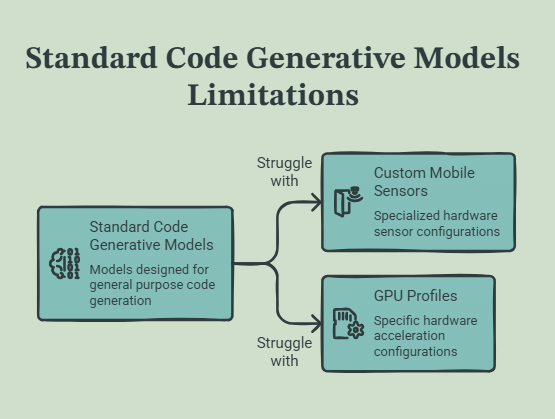
These specialized hardware integrations are critical when deploying custom mobile applications. Mobile platforms use unique APIs for location tracking, biometric scanning, and on-device machine learning processing.
Because these physical APIs are constantly updated by hardware manufacturers, automated models often lack the real-world trial data needed to write reliable integration code. Human developers remain essential to test, debug, and configure these hardware-focused layers.
Knowing how to build AI-powered applications at an architectural level is becoming one of the most valuable skills in the industry. Engineers who understand both the AI tooling and the platform-specific constraints are building the most resilient products in 2026, and that combination is something no automated system can replicate on its own.
What Business Leaders Should Take from All of This
If you are a founder or product leader planning a development effort in 2026, the operational math has changed. Smaller, more experienced teams using AI tools well can outperform larger teams that are not. This changes expectations around cost, timelines, and output quality.
The future of software development AI enables means that a focused three-person team can now deliver what previously required eight or nine engineers. Budget and timeline conversations should reflect this reality. Cutting team size without raising the skill ceiling of remaining members is a mistake we see companies make repeatedly.
Are developers at risk from AI at an individual level? Those who treat their current skill set as fixed and avoid adapting face real pressure. The profession as a whole remains in strong demand, especially for engineers who combine technical depth with a grounded understanding of how AI trends are reshaping mobile development at a practical level.
So, Will AI Replace Developers?
Well, the tools are powerful, the productivity gains are real, and certainly entry-level tasks are being automated. But the core work of building products that are secure, scalable, and aligned with real business outcomes still depends on experienced human engineers who know how to think outside the code.
By keeping up with app development trends in 2026, our engineers at Appnality remain at the forefront of this shift. We combine automated code generation tools with thorough human code reviews to build highly secure, custom digital products.
If you want to know how the future of software development AI can benefit your business, partner with Appnality to discuss your development requirements and map out a technical growth plan that holds up long-term.