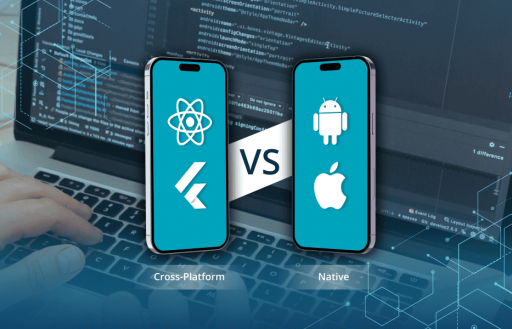


Choosing native or cross-platform development greatly determines your game’s success when it comes to mobile game development; both strategies have their pros, and the best strategy for your project depends on the necessary considerations of what one is trying to achieve, given their audience and resources.
Whether you are a company that develops mobile games and is interested in offering game development services or an entrepreneur looking to hire a game developer, you are required to analyze the key differences defined in the blog.
Understanding the Difference Between Both Game Development Solutions
In native mobile app development, the games are developed on one platform, either iOS or Android, and in the specific language used by the platform, like Swift or Java. This type generally results in highly optimized games, superior in performance and accessibility to device-specific features. It’s a very popular choice for best game developers with high-end gaming projects, though it involves a costlier development and a much longer timeline.
Whereas cross-platform development allows you to develop a game once and deploy it across multiple platforms, including both iOS and Android, this method often proves to be cheaper and faster, making it appealing for developers to release their games at once for the masses. Tools such as Unity or Unreal Engine enable the developer to release a quality game that runs well on various devices, but sometimes that’s inconsiderate to the finer optimization one gets from native game development.
Native Game Development vs. Cross-Platform Game Development
This blog will let you get deeper insights into the pros and cons; with this knowledge, it will be easier for you to decide which strategy best suits your needs. Whether you are specifically looking for an Android game developer for a particular platform or seeking mobile game development services that provide solutions across platforms, understanding these options will ensure you make the best choice for your project.
Let’s learn native and cross-platform mobile development comparisons to figure out which approach may be the best for your next game development project.
What is a Native Mobile Application?
Native mobile application means software that is developed for a particular operating system (OS) such as iOS or Android. Certain platform-specific programming languages and tools, like Swift or Objective-C for iOS, Java or Kotlin for Android, are used for the development of mobile apps. Native apps focus on the use of all abilities of an OS and a device to ensure high performance and seamless integration with hardware and software features.
Key Features of Native Mobile Application:
Platform-Dependent Development: Native mobile applications are specifically designed for one platform only and strictly adhere to the design guidelines and usability principles of that OS.
Performance: Native apps run more natively on that device; what that means is that they will have optimized functionality, fast loading times, and better graphics rendering. And that can be critical for gamers or for resource-intensive apps’ users.
Features of the Device: They can fully employ features, such as cameras, GPS, accelerometers, or push notifications through the platform’s API.
User Experience: Native mobile development applications provide a better user experience since they are closer to the standards set for UI/UX for each platform.
Some Most Well-Known Native Mobile App Examples
Some examples of native mobile apps include:
- Instagram: Made natively to use the advanced camera and multimedia facilities for both Android and iOS.
- WhatsApp: A very popular communication application that is optimized for flawless execution and an easy interface with both platforms.
- Google Maps: This is a fantastic example that has many native features. Native applications allow them to offer GPS tracking and offline navigation to their users of a mobile device.
- Spotify: Spotify is the streaming music application that delivers high-quality sound and allows users to manage the audio controls of their devices natively.
- Uber: Ride-sharing app. It was a native building application with real-time GPS tracking and dynamic features in view for Android and iOS.
- DoorDash: Amongst the biggest food delivery applications all over the United States, it is known to offer a smooth user experience along with efficient usage of the available resources in a device
Popular Native-Platform App Tools
Native platform app tools are the building blocks for applications that best suit specific native operating systems. Some of the most popular native mobile application development tools are listed below:
For iOS Development:
- Apple’s official IDE for creating apps for iOS, macOS, watchOS, and tvOS.
- It comes with a set of development tools, like a graphical interface designer and performance testing tools.
- Apple’s primary programming language for native iOS apps.
- Safety, Speed, and Modern syntax are some of the known qualities of Swift.
For Android Development:

- The official IDE for Android development by Google.
- Offers such features as a visual layout editor, a code editor, and an emulator for testing.
- It is one of the current programming languages approved by Google for Android project development.
- Much concise, with just a few safety features, superior compared to Java.
- Cross-Platform Frameworks with Native Abilities.
- Allows developers to craft native-like apps using JavaScript.
- Has native components support, ensuring high-performance apps.
- Google’s UI toolkit is used to create natively compiled applications.
- Uses the Dart programming language and can be used for fluent performance.
Other Tools
- A powerful engine for creating games across platforms with great support for native mobile development features.
- Third-party IDE by JetBrains that supports iOS/macOS development
- Has better instruments for refactoring and navigation.
Each tool provides strong solutions for developers who target native game development or other high-performance apps. Project scope, platform requirements, and developer expertise thus dictate choosing the right tool.
Pros of Native Mobile Game Development
- High-Performance Usage: Native apps are using all the capabilities that a device is giving, so they have a smooth performance, and a powerful experience is important for mobile game development.
- Superior UX/UI: Native mobile applications have an intuitive user interface and user satisfaction, the same way native mobile app examples show on Instagram.
- Access to Device Features: Native development provides full utilization of hardware-specific features such as GPS, cameras, and sensors, so it is perfectly suited for game development services.
- Reliability: Native apps tend to run consistently on devices, meaning fewer crashes and smooth playtime, which is any mobile game development company’s top priority.
- Scalability: Native applications are easier to scale and optimize for high-performance environments, consistent with the long-term strategy of game development.
Cons of Native Mobile Game Development
- Higher Development Cost: It increases development cost because it requires different Android and iOS apps, which is less appealing for small businesses aiming to hire game developers.
- Time-Consuming: Cross-platform development is relatively slower compared to developing separate apps for each platform.
- Complex Maintenance: The load for maintenance increases because updates and bug fixing have to be done on each separate platform.
- Requires Domain-Specific Expertise: one needs Android game development companies and iOS programmers, which complicates the distribution of resources.
- Limited Code Reusability: Unlike native and cross-platform mobile development, native does not support sharing code across platforms. These bring about redundancies in the efforts of the developers.
|
ASPECTS |
BENEFITS | LIMITATIONS |
| Performance | High performance with seamless device integration, ideal for resource-intensive apps like games. | Development requires platform-specific coding, increasing time and cost. |
| User Experience (UI/UX) | Adheres to platform-specific guidelines, delivering intuitive and polished interfaces. | Design consistency must be maintained separately across platforms. |
| Device Features Access | Full access to hardware features such as GPS, cameras, and sensors, enhancing app functionality. | May require constant updates for compatibility with new hardware features. |
| Security | Enhanced security due to platform-native tools and controls. | Implementing security features can be complex and resource-intensive. |
| Code Reusability | Optimized for a single platform, offering stability and scalability. | Limited or no code reusability across different platforms. |
| Scalability | Apps can handle higher workloads and adapt easily to platform upgrades. | Requires separate scaling strategies for Android and iOS apps. |
| Development Cost | Suited for high-end projects with advanced features. | Higher development and maintenance costs due to platform-specific coding. |
What is Cross-Platform App Development?
Cross-platform application development is developing applications for running cohesively with numerous operating systems, such as iOS, Android, and even web-based platforms, using a single codebase. This is very advantageous for companies targeting a wider audience, but does not require them to build special applications for each platform. Thus, it is often preferred by mobile game development companies for being effective and cost-effective.
Key Features of Cross-Platform Development
Single Codebase: Developers write code in just one codebase that works on several platforms.
Cost-Effectiveness: Since one app supports multiple platforms, the development cost decreases considerably, which makes it very lucrative for businesses specializing in game development services.
Quicker Development: The shared codebase leads to quicker turnaround times, which are important if developing mobile games under tight deadlines.
Maintenance Ease: The upgrade of the bug fix should occur only once, bringing ease to app maintenance.
Some Most Well-Known Cross-Platform App Examples
The most prominent examples of cross-platform applications for developing mobile games include:
- Skype: Video call, voice call, and messaging application, developed with cross-platform frameworks, so the application runs flawlessly on iOS, Android, Windows, and macOS.
- Slack: An App that enables team communication and teamwork. It follows a shared code base to deliver a uniform experience both on the web, mobile as well and on desktop platforms.
- Microsoft Teams: A chat app for work that includes chat, video calls, and file sharing. Built for cross-platform solutions, so it works efficiently on Android, iOS, and a desktop version.
- Airbnb: A website to make bookings for accommodation and experiences all over the world. It leverages cross-platform development to deliver homogeneous functionality and design
- Uber Eats: The food delivery application leverages a cross-platform solution for its mobile application to deliver a hassle-free user experience across Android and iOS.
- Google Ads: A cross-platform marketing and analytics tool that can deliver very robust functionality on various platforms.
Popular Cross-Platform App Tools
Some of the most widely used tools and frameworks for cross-platform app development include:
React Native
- Facebook has developed this tool, which enables developers to use JavaScript and React to build natively rendered applications for mobile.
- Pops with near-native performance, remarkable library support, and fantastic capabilities for rapid prototyping and fast feature deployment.
Flutter
- A Google framework that bases development on the Dart programming language.
- Customization of widgets is possible with high-performance rendering of native-like UI and fast app execution.
- Often used in game and animation-intensive applications.
Xamarin
- These are owned by Microsoft and allow developers to write apps for both iOS, Android, or Windows from C#.
- Access to native APIs providing near-native app performance.
Unity
- Primarily for game development, it is widely used by the best game developers for the creation of cross-platform games.
- Supports Android, iOS, Windows, and even gaming consoles.
Apache Cordova
- A framework for building mobile apps utilizing web technologies like HTML, CSS, and JavaScript.
- Best used for the building of simpler apps that require a lightweight solution.
Ionic
- A hybrid framework for building mobile and web apps utilizing web technologies.
- Famous for its library of ready-pre-built components and tools.
PhoneGap (Adobe)
- Built on top of Cordova, it makes app deployment easier with the integration of native device access tools.
Kotlin Multiplatform
- Allows for code sharing between Android, iOS, and web.
- Recommended for projects that require strong-type safety and a modular architecture.
Haxe
- A cross-platform toolkit, strong in game development, supports multiple programming languages.
Qt
- A solid development framework that supports cross-platform development of mobile, desktop, and embedded systems.
- Provides very powerful tools for creating rich user interfaces as well as animations.
These tools are widely adopted by mobile game development companies and business houses providing game development services so that they may use efficient game development strategies and solutions for different types of user bases.
Pros of Cross-Platform Development
- Cost-Effectiveness: One codebase for the business reduces development cost, especially for small teams or startups looking for game development solutions.
- Even Faster Time-to-Market: Reduced coding enables the company to bring out apps quicker across multiple platforms.
- Wider Range: One app caters to the needs of Android and iOS; this lets developers reach a wider range of audiences without individually hiring Android game developers or iOS specialists.
- Single Code Maintenance: Updates and bug fixes of the application are done once, reducing time and effort as compared to native mobile development.
- Scalable Solutions: Those frameworks are scalable- Flutter, React Native, etc. It makes project efficiency among other things.
Cons of Cross-Platform Development
- Performance Limitations: Cross-platform apps also suffer from the limitations of performance compared to native mobile applications, especially with resource-intensive applications such as games.
- Limited Accessibility to Platform-Specific Features: Certain hardware-specific functions may not be supported; hence, the production of mobile games becomes an uphill task.
- Potential Compatibility Issues: Framework updates or API changes may disrupt functionality, complicating the game development strategy.
- Design Inconsistencies: Applying universality in UX in all platforms could become rather difficult, thus affecting the quality of examples of cross-platform applications.
- Dependency on Frameworks: Support and updates for the future of the application become dependent entirely on the cross-platform tool, and that’s very tricky in long-term native and cross-platform mobile development.
| ASPECTS | BENEFITS | LIMITATIONS |
| Cost Efficiency | A single codebase reduces development and maintenance costs. | Customization for platform-specific features may increase costs. |
| Development Speed | Faster time-to-market with shared codebase across platforms. | Debugging cross-platform frameworks can be time-consuming. |
| Platform Coverage | Reaches a broader audience by supporting multiple operating systems like iOS and Android. | Performance may not match the efficiency of native applications. |
| Code Maintenance | Updates and fixes need to be implemented only once, simplifying management. | Framework dependencies may create long-term support challenges. |
| User Experience (UX) | Consistent UX across platforms enhances user satisfaction. | May struggle to replicate platform-specific UX nuances compared to Native Mobile Applications. |
| Scalability | Suitable for projects requiring rapid scaling across diverse platforms. | Complex apps like games may not perform optimally without platform-specific optimization. |
| Tool Versatility | Access to powerful frameworks like React Native and Flutter for robust game development solutions. | Framework limitations might restrict the use of advanced device features. |
| Resource Optimization | Reduces the need to separately hire Android game developers or iOS specialists. | Apps may face compatibility issues with system updates or new hardware. |
Final Verdict: Native Game Development vs. Cross-Platform Game Development
It depends on your project needs, audience, budget, and desired functionalities; native mobile development versus cross-platform development. Here’s the breakdown of when to use what:
When to Choose Native Mobile App Development?
Performance-Intensive Applications
This type of application demands high performance – games, augmented reality, and heavy graphical processing falls under this category. It operates efficiently with platform-specific capabilities.
Application Requiring Access to High-End Device Features
These applications need native device features such as sensors, camera, GPS, or system-level APIs. Examples include banking applications and health tracking applications.
Superior User Experience (UX)
Most suitable for apps that require platform-specific UX with unique designs and animations specific to iOS or Android.
Examples: WhatsApp and Spotify are native mobile apps.
Long-Term Investment
Solution That Prioritizes Scalability and Platform Stability. Native apps guarantee better future-proofing.
Targeting a Single Platform
If your app is targeting only one platform, e.g., iOS or Android, native development is more cost-effective and efficient.
When to Choose Cross-Platform Development?
Budget Constraints
Ideal for companies looking to create an app on several platforms but have a limited budget for different deployments. Learner-friendly for startups and small businesses catering to game development.
Faster Time to Market
It is apt for those projects that need expedited deployment on iOS and Android. Reduced development time due to the single code base.
Wider Coverage
Appropriate for companies targeting diverse users using different Android and iOS brands. Suitable for mobile game development firms aiming to capture a wide audience.
Simple to Moderate Complexity
Suitable for apps with simple functions or common UI/UX requirements. Examples include: Social media Apps, E-Commerce platforms.
Efficient Use of Resources
Reduces two separate teams: one for Android game developers and another for iOS experts.
Key Takeaway
- Advanced applications that have performance-sensitive features require native development
- General or moderately complex applications can be cross-platform because they are more efficient and save costs
- It should follow the cross-platform development strategy, goals, and expectations of the game from your users.
In Closing
In conclusion, this decision is important for achieving the objectives of your apps between native mobile development and cross-platform development. Thus, native development would be used for apps that require superior performance, deep integration with device features, or a more platform-specific user experience.
Cross-platform solutions opt for cost efficiency, faster time-to-market, and greater reach into many audiences. Whether developing high-performance mobile games or strong enterprise applications, exciting social apps, or any other interesting kind of mobile application, the correct one depends on your objectives, available resources, and target audience.
At Appnality, we specialize in developing customized game development solutions and innovative mobile applications so that you can make the best use of the latest technology suited to your needs.
Appnality brings ideas to life as effective digital solutions through a team of the best game developers and expertise in both native and cross-platform mobile development. From comprehensive game development services to hiring game developers with specific expertise relevant to the task on each particular platform, we set the standards for results above expectations.
Whether native mobile applications for unparalleled performance, cross-platform development for wide-reaching efficiency, or to benefit from our strategic approach with every project. Partner with us to bring your vision to life, empowered by the latest technology and a steadfast commitment to excellence!